
Florida Pothole Repairs
Asphalt Pothole Repairs
Potholes are created when moisture seeps into the pavement, gets cold, expands and then thaws. This weakens the pavement. Traffic loosens it even more, and it eventually crumbles and pops out.
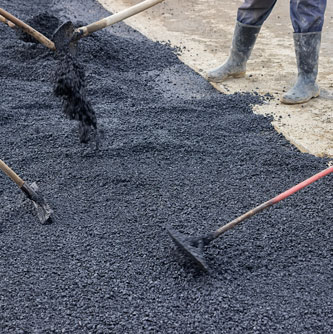
Pothole repairs are performed by removing the damaged asphalt with a jackhammer or masonry saw to create a neat rectangle. When the excess asphalt is removed, an adhesive is applied and asphalt is added in layers. It is leveled off and compacted with a pavement roller.
Five Steps to Pothole Repair
Pothole Repair Failures
Here are some of the key reasons for pothole repair failures:
-
Lack of adhesion to the sides or bottom of the repair.
Lack of adhesion can lead to cracking. When water gets into cracks, it can expand and contract as it changes temperature. This action may dislodge the repair.
- Dishing.
Dishing is surface settling that results when the repair mix is inadequately compacted.
- Pushing or shoving of the patching mix.
Pushing or shoving has several possible causes: inadequate shearing resistance in the mix or a poorly compacted mix, the bleeding of tack or liquid asphalt to the upper portion of the repair, or a poorly designed mix.
- Loss of material through raveling, delamination of the patching mix, and drainage failures.
Raveling is losing material from the surface of the repair and may result from a variety of causes, such as inadequate cohesion within the repair mix or poor compacting.
- Other causes of premature pothole repair failure are:
Reflective cracking, delamination, and poor drainage: Reflective cracking is cracking that originates in old, underlying pavement and continues into the patch. Delamination is the peeling away of thin overlays of asphalt concrete from the surface of the roadway due to poor adhesion. And poor drainage becomes a factor when the pothole repair is in a low-lying area, where it remains constantly wet and water damage results.